

Building the Peace
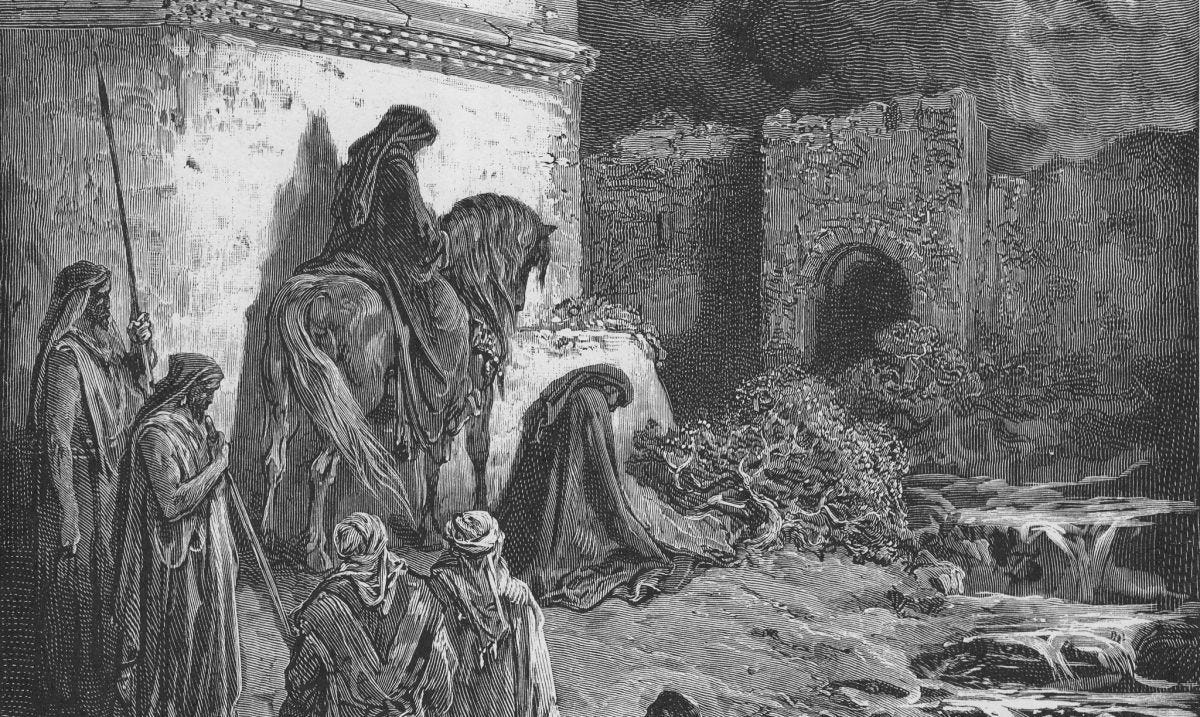
Understanding the times in order to respond faithfully is an ancient discipline. Nehemiah’s night visit to see for himself the ruin of Jerusalem’s walls gave him the moral conviction that made his rebuilding proposal both credible and constructive. Jeremiah’s instruction to the exiles in Babylon was similar in spirit — neither to rebel nor to withdraw into purity, but to “seek the peace of the city… for in its peace you will find your peace.” It was a directive to settle, and to build.
Augustine, reflecting on this centuries later, described the Church as a pilgrim city that avails itself of earthly peace without adopting earthly loves as its own - distinctive in its ultimate loyalty, constructive in its earthly engagement. That double posture, neither withdrawal nor assimilation, remains the pattern for how Christians are called to meet this moment.
What, then, are the times we live in? Several things are happening at once in this interregnum as the old era breaks down and the new unfolds. Fallout from decades of progressive globalisation - commodification, loneliness, inequality, dislocation from place, loss of agency, moral confusion - is provoking on the one hand a yearning for the restoration of a settled life, and on the other a belief that pushing on with, even accelerating, the inner logic of the dying order will only make things better. This tension between sovereignty and globalisation cuts across the old left-right divide.
Into this mix comes the AI revolution. The challenges it presents map onto those opposing positions: if harnessed for the common good, this new technology could play a critical role in restoring agency and settled life; but if left unconstrained, its unprecedented and unaccountable global power threatens what it means to be human.
How this resolves rests on moral questions about the nature of reality. The dying era was driven by a false notion of the human being as an isolated individual, rather than the Christian anthropology of the person as a relational being made in the image of God. Understanding these roots is fundamental to responding authentically: this is what underpins Jeremiah’s call to build a settled life, strengthen human dignity, and resist the powers that undermine flourishing.
Governments are under intense pressure to make good decisions. It remains to be seen whether the new UK leadership will reach clarity on these moral questions, but even if it does, the structural conditions that defeated previous administrations remain, and the years ahead look challenging.
But government cannot and should not be expected to do everything. Catholic Social Teaching asserts that for a healthy society, responsibility must be shared, and it places special importance on the intermediary institutions - church, school, business, charity and family - bodies that are human-scale, positioned between the individual and the state.
In Magnifica Humanitas, Pope Leo XIV calls precisely for this intermediary layer to be strengthened as a means of resisting unaccountable power, in particular the oligarchic power behind AI. He reaches for two images from Scripture: the Tower of Babel, where the effort to build a route to power through uniformity and self-sufficiency without God ends in confusion and scattering; and the rebuilding of the walls of Jerusalem under Nehemiah, where ordinary people are each responsible for their own short stretch of wall, listening to one another, building together under God.
Clearly, the Church has a distinctive role in terms of moral leadership at times like this. And sometimes, taking a countercultural position is required: we are called to be the handmaid of the Lord, not the handmaid of the state, and this may mean standing in solidarity with those who hold unpopular views.
The Church is called to speak the truth. But as Lord Glasman has noted, the Church has been silent in some critical areas of concern, in particular regarding acts of religious terrorism in our streets. The renunciation of civic violence is, as he puts it, part of what is meant by “the Kingdom.” Catholic Social Teaching regards civic peace as an essential component of the common good: peace is not merely the absence of conflict, it is about building a justice-based social order. The times call for courage.
The choice Pope Leo sets out is Babel or Nehemiah: a false unity built on global ambition without God ending in scattering, or a shared work of many small, faithful contributions to build a settled life. This is as true of how we harness the potential of AI as it is of the need for restoration after globalisation: whether we restore agency or enable unaccountable power will be decided by whether enough of us choose Nehemiah’s distributed, relational approach under God.
None of this need be overwhelming. We are asked only to rebuild our own short stretch of the wall. That same courage is needed in how we build: embedding an authentically relational anthropology in all we do is what turns each small act into part of something larger. This is the work for which Together for the Common Good exists: helping leaders, churches, schools and charities to identify their own stretch of wall, and to fulfil their vocational responsibility in their unique and complementary works of repair.
Wishing you every blessing and a peaceful summer.
Jenny Sinclair
Together for the Common Good
In this edition
Maurice Glasman Christ is King! Restoring a Covenantal Politics
Jenny Sinclair From Service to Communion: Exploring Humanitas for Our Time
John Clifton “What About Me?” Lost Sheep and the Limits of Charity
Leaving Egypt podcast: new episodes Bishop Guli Francis Dehqani, Justin Gill, Tim Soerens, Maurice Glasman, Ian Williamson
T4CG Report on AI, the Future of Work and Christian Discernment
Jo Stow Common Good Schools: Summer Update
Booking open: Staying Human online lecture with John Clifton: 13 October
Discover all these pieces below
Christ is King! Restoring a Covenantal Politics

Speaking at this year’s WeBelieve Festival at St Mary’s Oscott, Lord Glasman reflects on exile, gratitude, covenant and the Christian inheritance of England. An Orthodox Jew deeply shaped by Catholic Social Teaching, he argues that amid profound cultural and political change, the restoration of the Church’s public vocation is essential to renewing civic peace, solidarity and the common good.
Read the talk here.
From Service to Communion - Exploring Humanitas for Our Time

When did care for one another become more like a transaction than a relationship? How did that happen, and why does it matter? In this keynote for the Archdiocese of Liverpool’s Social Action Conference, Jenny Sinclair argues that provider models, however well intentioned, can weaken agency and hollow out community. Drawing on Catholic Social Teaching and Pope Leo’s new encyclical Magnifica Humanitas, she makes the case for moving from service to communion. At a time of social fragmentation and rapid advances in AI, she offers a hopeful and practical vision for rebuilding the common good through stronger relationships, deeper local belonging and a renewed understanding of the human person.
Read / listen to the talk here
“What About Me?” Lost Sheep and the Limits of Charity

We are pleased to have permission to share a lecture by John Clifton challenging the prevailing culture of professionalised Christian charity. He asks searching questions about class and morality, exploring what the gospel offers those who have been marginalised by mainstream societies. Clifton, who is Divisional Leader of the Salvation Army’s North East Division, argues that poor communities do not need a merely competent Christian social action but an approach capable of truthful, holy, and proximate witness.
Read the lecture here
Discover Magnifica Humanitas

Discover the much discussed Magnifica Humanitas (Magnificent Humanity), the new encyclical by Pope Leo XIV focusing on Safeguarding the Human Person in the Time of Artificial Intelligence. We have produced a quick guide to its key ideas and provided a some links to a selection of commentaries, resources and articles.
Explore the guide here.
Leaving Egypt podcast - new episodes
Join Jenny Sinclair and Al Roxburgh - co-hosts of the Leaving Egypt podcast - to read the signs of the times, encounter stories of hope and explore what it means to be God’s people in this time of great uncertainty.
We are excited to bring you our latest episodes (pictured clockwise from bottom left)
Re-Enchanted, Relational, Local - with Tim Soerens
A Politics of Restoration - with Maurice Glasman
Guiding a Church in a Time of Crisis - with Bishop Guli Francis-Dehqani
Christian Witness in De-industrialised Communities - with Justin Gill
Walking with Jesus in Deprived Places - with Ian Williamson

After the summer break, Al and Jenny will return with more wonderful guests including Tracey Rowland, Karen Wilks, Matthew Sanders and Christian Smith.
Listen and join the Leaving Egypt community here
REPORT: Staying Human: AI, the Future of Work and Christian Discernment

Following Matthew Sanders’ recent visit for our latest Staying Human event, we have produced a short report - including a summary of the lecture, Q & A, round table discussion and informal meeting with parliamentarians, as well as links to video and text. Whatever your role, sector or tradition, we hope you find this report useful to think through the implications of AI, the Future of Work and Christian Discernment.
Download the report here.
Common Good Schools - Summer update 2026

In this summer update, our Common Good Schools Project Leader Jo Stow welcomes new schools joining the programme and reports on recent talks and sessions delivered for senior leaders. She also shares news for the autumn term including the next deadline for schools wishing to join the programme, and an invitation for Anglican primary schools to pilot our new KS2 resource.
Read all about it here.
We are recruiting!

We are looking for a new colleague to support our Common Good Schools Project Leader Jo Stow from September 2026. This is a part-time role (2.5 days per week), home-based with some travel across the UK. It would suit a highly motivated, well-organised person with education experience, who is passionate about relationships, and helping communities thrive.
Closing date for applications: Monday 1 September 2026, 5pm.
Download the recruitment pack here
Booking open - Staying Human #6: Tuesday 13 October
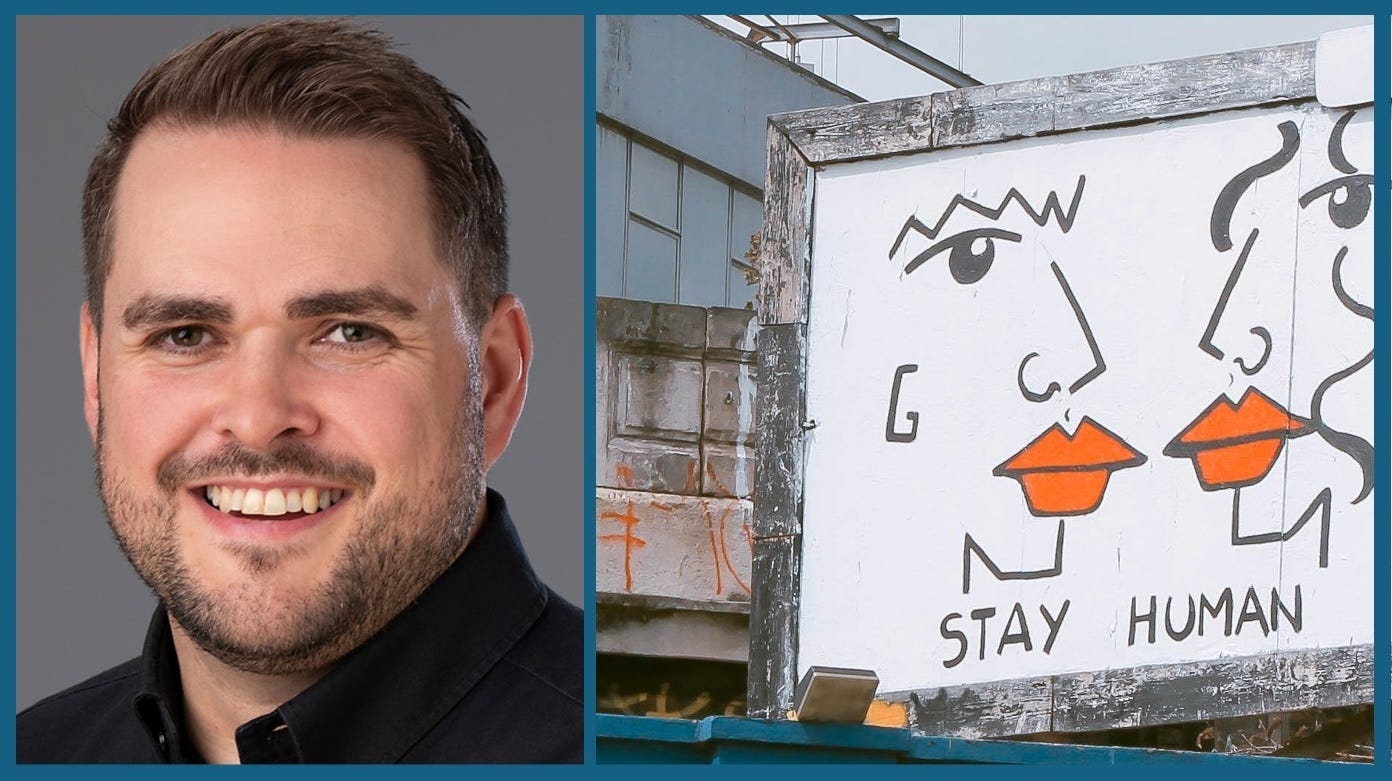
Tuesday 13 October 2026, 6.30pm ONLINE LECTURE with John Clifton
Staying Human #6: Finding Christ in Places Written Out of the Future
In this, the sixth of our Staying Human talks, we are prompting a frank conversation about how globalisation reshaped not only our economy and our politics, but also how we treat people and places. Drawing on his encounters with anger and grief in deindustrialised communities, and on signs of spiritual hunger in places where institutional Christianity has thinned, John Clifton will explore what these places reveal about the deeper moral and spiritual crisis of our time. His approach is not only diagnosis but primarily constructive: inspired by Franciscan, Salvationist and Catholic Social Teaching traditions, John calls the churches back to proximity - to a way of following Christ that answers abandonment not with charity alone, but with humanising solidarity.
Captain Dr John Clifton is a Salvation Army officer, theologian and community organiser based in North Shields. He serves as Divisional Leader for The Salvation Army in the North East of England, overseeing operations and ministry across the region.
Book your place to join us online
Thank you
Over the last 15 years, thousands of people have engaged with Together for the Common Good. It is thanks to their energy, prayer, encouragement and support that this work has borne so much fruit.
We engage churches, charities, leaders and schools through online resources, in-person talks, the Leaving Egypt podcast and the Common Good Schools programme, helping people fulfil their calling for the common good.
If you believe this work matters, here are three ways you can help:
Donate with a one-time gift
Share this post with a friend
Whatever your contribution, your presence here matters — no matter your tradition or your politics.
Join us today and become part of this growing network of faithful people dedicated to civic and spiritual renewal.
Header image: Nehemiah views the ruins of Jerusalem’s walls - Gustav Dore, 1866